
ISO 9001 Implementation Guide: 10 Steps to QMS Certification in 2026

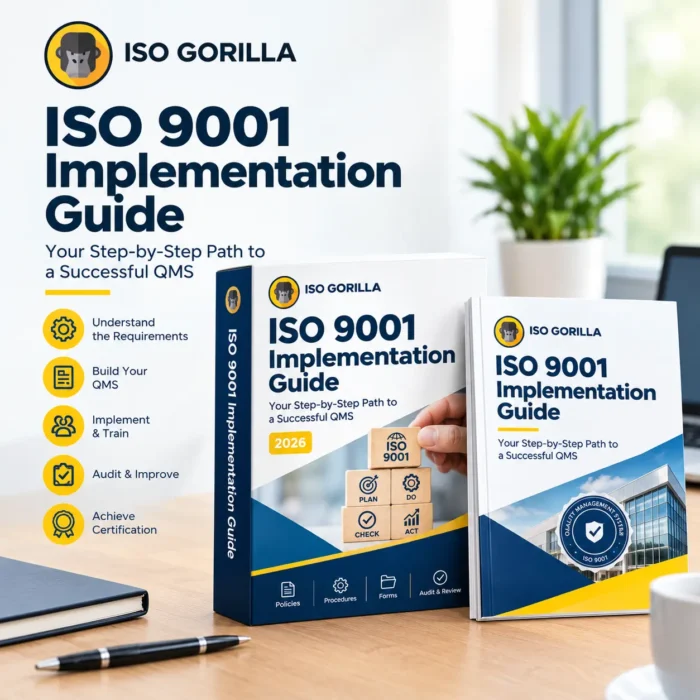
ISO 9001 Implementation Guide: 10 Steps to QMS Certification in 2026
This ISO 9001 implementation guide walks you through the whole project in ten practical steps, from getting management on board to passing your certification audit. It is written for quality managers and business owners who need a clear plan, not a textbook. Follow it in order and you will know what to do, what to document and what to show your auditor.
To implement ISO 9001, secure management commitment, run a gap analysis, define your scope, policy and objectives, document your processes, train your people, run the system, audit it internally, hold a management review and then book a certification audit with an accredited body.
What does an ISO 9001 implementation guide cover?
ISO 9001 is the international standard for quality management systems (QMS). Implementing it means building a system that fits how your organization really works, then proving it with documents and records. Certification is not a paperwork exercise: auditors check both what you wrote and what your people do.
Every ISO 9001 implementation guide, including this one, divides the work into three parts: design (scope, policy, risks, processes), documentation (manual, procedures, forms) and proof (training, audits, reviews, records).
ISO 9001 implementation guide: the 10 steps
Start with steps 1 to 5 of this ISO 9001 implementation guide, which set the foundation.
Get top management commitment
ISO 9001 puts responsibility on leadership. Agree the goal, name a project owner and make sure management will provide time and resources.
Run a gap analysis
Compare how you work today with the standard. Our ISO 9001 checklist turns clauses 4 to 10 into yes/no questions you can answer in an afternoon.
Define scope and context
Decide which products, services and sites the QMS covers. List the interested parties whose needs matter, such as customers, regulators and suppliers.
Write the quality policy and objectives
Draft a short policy leadership will sign, then set measurable objectives with owners and deadlines.
Assess risks and map your processes
Identify risks and opportunities, then map the core processes: how work flows from customer enquiry to delivery and feedback.
Steps 6 to 10 of the ISO 9001 implementation guide turn the design into a working, auditable system.
Document the system
Prepare a quality manual, procedures and record forms. Starting from professional ISO 9001 documentation templates saves weeks of drafting and keeps numbering and formats consistent.
Train people and run the system
Brief every team on the policy and their procedures, then run the system long enough to build real records: training, supplier reviews, customer feedback and corrective actions.
Run an internal audit
Audit every process against the standard. For a ready question set, see our ISO 9001 internal audit checklist guide.
Hold a management review and fix findings
Leadership reviews performance data, audit results and risks. Close every nonconformity with a root-cause corrective action.
Book the certification audit
Choose an accredited certification body. The Stage 1 audit reviews your documentation and readiness. The Stage 2 audit checks that the system is implemented and working.
ISO 9001 implementation guide: DIY, consultant or kit?
Most organizations choose one of three routes to follow this ISO 9001 implementation guide. The right one depends on your budget, your in-house experience and how fast you need to move.
| Start from scratch | Consultant | Documentation kit | |
|---|---|---|---|
| Drafting effort | Highest | Done for you | Edit ready-made documents |
| Cost | Staff time only | Billed per project or hour | $250 one-time |
| Control | Full | Know-how often leaves with them | Your team learns and owns the system |
| Consistency | Depends on your team | Depends on consultant | One document control system |
| Support | None | Billed by the hour | Questions answered within 24 hours |
Compare the full contents on our ISO 9001 documentation kit page.
ISO 9001 implementation guide: common mistakes to avoid
Mistakes to avoid
- Leaving it all to one person
- Copying documents without adapting them
- Writing procedures nobody follows
- Skipping risk assessment
- Leaving the internal audit until the last week
What auditors look for
- Management involvement
- Documents that match real practice
- Training and competence records
- Internal audit and review results
- Corrective actions that were closed
ISO 9001 implementation guide: the 2026 edition
ISO published ISO 9001:2026 on 16 September 2026, with a three-year transition period for organizations certified to the 2015 edition. New implementations should be built for the current edition. Read the official overview on the ISO website and confirm with your certification body which edition they will audit you against.
ISO 9001 implementation guide: frequently asked questions
What are the steps to implement ISO 9001?
The main steps are: secure management commitment, run a gap analysis, define scope and context, write the quality policy and objectives, assess risks and map processes, document the system, train people and run it, run an internal audit, hold a management review and book the certification audit.
How long does ISO 9001 implementation take?
There is no fixed time. It depends on your size, how many processes you have, how much documentation already exists and how much time your team can give the project. Starting from ready-made templates shortens the documentation phase.
Can we implement ISO 9001 without a consultant?
Yes. ISO 9001 does not require a consultant. Many organizations implement it in-house using a documentation kit and then pass the audit by an accredited certification body.
Which documents do we need for ISO 9001?
You need documented information for the QMS scope, quality policy, objectives and process controls, plus records such as training, calibration, supplier evaluations, internal audits, management reviews and corrective actions.
What happens in the certification audit?
The certification body runs a Stage 1 audit to review documentation and readiness, then a Stage 2 audit to check that the system is implemented and effective. Any nonconformities must be closed before the certificate is issued.
Related toolkits and guides
 ISO 9001 ChecklistClause-by-clause guide
 ISO 9001 TemplatesProfessional documentation
 ISO 9001 Documentation KitWhat's inside
 ISO 14001 KitEnvironmental management
Put this ISO 9001 implementation guide into action today
Follow the ISO 9001 implementation guide faster. Get a complete, editable QMS documentation kit built by a team with 20+ years of ISO experience and used by 600+ clients in 109 countries.